Workshop Insulation Aging under Multi-Physics and Complex Voltage Stresses

IEEE DEIS Ageing Factors Technical Committee

This workshop is organized by the Aging Factors Technical Committee of the IEEE Dielectric and Electrical Insulation Society. It will bring together industry experts and academic researchers to discuss recent advances in insulation ageing and qualification methodologies for emerging electrical equipment. Particular emphasis will be placed on accelerated ageing protocols, waveform-dependent insulation degradation mechanisms, and qualification criteria for next-generation electrical systems.
 
The workshop aims to identify critical research challenges relevant to industry, foster collaboration between academia and industry, and support the development and reliable deployment of advanced electrical equipment. The workshop will provide a platform for sharing knowledge, discussing future research directions, and promoting engagement with international standardization activities. In addition, the workshop will offer early-career researchers valuable opportunities to interact with leading experts, exchange ideas, and build professional networks across academia, industry, and the international standards community.
 
 
• Thermal cycling testing on generator stator bars/coils – A challenge in the industry
• Aging of Paper-Based Insulation in Power Transformers: Effects of Temperature, Insulating Liquids, and Material Selection
• Key Technologies of Motor Insulation for Power Electronic Drives Under Extreme Environments
• Mitigating Saline Contamination in High-Voltage Systems: A Multimodal Diagnostic Approach


Date: September 20, 2026
Time: 1:00 PM – 5:30 PM
Workshop Venue: Radisson Blu São Paulo
Workshop Fee: R$ 240,00
 

Registration [here]

•Workshop Speakers

stack photo

Dr. Hugh Zhu

BC Hydro, Canada

Keynote Speech: Thermal cycling testing on generator stator bars/coils – A challenge in the industry

In some applications, for example, hydro-generators (peaking duty and pumped storage), synchronous condensers, and gas turbine generators, large rotating machines are subjected to rapid transitions from low power to full power, and vice versa.  As a result of rapid changes of temperature, an alternating shear stress develops within the groundwall insulation system and causes delamination of insulation tapes. Voids can develop between the layers of groundwall insulation as a result of delamination. In high-voltage bars/coils, these voids can lead to partial discharges, and, under certain circumstances, to puncture of the insulation. If the bond between the copper and the insulation is not adequate, the copper may be separated from the insulation. This results in the formation of voids between the insulation tape and the copper that may permit relative movement of the copper strands/turns, leading to abrasion of the insulation. 
 
Thermal cycling testing is intended to simulate this thermal cyclic aging mechanism under controlled conditions. To give meaningful results in a reasonable time, acceleration is achieved by repeatedly applying heating and cooling cycles to the stator bars/coils. The testing has been used to check the manufacturing quality of the insulation system for several decades. The industry has spent multi-millions of dollars each year on thermal cycling testing. However, many questions were raised regarding the testing. There was hot debate in the International Standard Committees. This presentation includes the following:
 
1.Description of thermal cycling testing
2.Questions, debates, and challenges in the International Standards regarding thermal cycling testing
3.Review of some past research and future research work
 

Dr. Hugh Zhu received his Ph.D. in the United Kingdom and has over 40 years of experience in dielectric testing, accelerated aging testing, partial discharge measurements, condition assessment, maintenance, insulation aging evaluation, and insulation failure investigations of high-voltage electric equipment. Throughout his career, he has worked in the UK, Canada, and the United States with the leading organizations, including Ontario Hydro Research, Powertech Labs, Doble Engineering Company, and BC Hydro. His research interest includes accelerated aging testing, insulation condition assessment of high voltage equipment, and partial discharge testing.
 
Dr. Zhu serves as a Technical Advisor to the U.S. National Committee of IEC TC 2, contributing to the development of the IEC standards for insulation testing of rotating machines. He has been actively involved in IEEE standard development and CIGRE Working Groups related to rotating electric machines for 30 years. Currently, Hugh chairs two IEEE standards: IEEE1434 and IEEE1553. He also serves as Chair of the IEEE DEIS Aging Factors Technical Committee.
 
stack photo

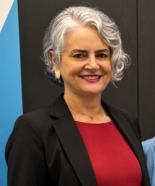
Dr. Helena Maria Wilhelm

VEGOOR Tecnologia Aplicada and SF6 Serviços, Brazil

Keynote Speech: Aging of Paper-Based Insulation in Power Transformers: Effects of Temperature, Insulating Liquids, and Material Selection

The presentation will examine the aging of paper-based insulation in power transformers, emphasizing how temperature, moisture, insulating-liquid type, and paper composition interact to determine degradation rate and service life. Particular attention will be given to differences among mineral oil, natural esters, and conventional, thermally upgraded, and hybrid paper insulation systems. The discussion will connect degradation mechanisms with diagnostic indicators used to assess insulation condition, including degree of polymerization, furanic compounds, alcohol markers, and dissolved gases. Drawing on laboratory studies, R&D projects, and field experience, the presentation will highlight practical considerations for interpreting aging data and selecting insulation systems, while identifying limitations and opportunities for improving transformer life assessment.
 

Dr. Helena Maria Wilhelm is a chemist with a Ph.D. from the University of Campinas (UNICAMP) and an M.Sc. from the Federal University of Santa Catarina (UFSC). She is Director of Research and Innovation and a partner at VEGOOR Tecnologia Aplicada and SF6 Serviços. With more than 24 years of experience in the electric power sector, her work focuses on insulating materials and liquids, paper-liquid insulation systems, transformer diagnostics, and SF6. She has contributed to more than 50 R&D projects and authored or co-authored over 110 technical papers. A CNPq Productivity Fellow in Technological Development and Innovative Extension since 2006, she has also taught undergraduate and graduate courses, reviews for international journals, and participates in technical standardization. She has been active in CIGRE since 2005 and contributes to international working groups on electrical insulation systems and diagnostics.

stack photo

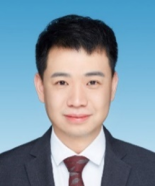
Dr. Peng Wang

Sichuan University, China

Keynote Speech: Key Technologies of Motor Insulation for Power Electronic Drives Under Extreme Environments

Power electronics have greatly altered motor operating environments. Converter-fed motors suffer persistent high-frequency PWM voltage stresses, distinct from conventional DC and sinusoidal AC conditions. Traditional motor insulation design and evaluation standards cannot adapt to such complex electrical stresses, creating prominent challenges for insulation systems. The booming electrification of transportation has widely deployed motors in electric vehicles, eVTOL craft, ship propulsion, high-speed railways and pumped storage units. Their varied operating conditions trigger insulation degradation and premature failure, undermining the long-term reliable operation of electrified facilities. This report presents China’s latest research progress on transportation-oriented motor insulation, covering winding insulation multi-physics simulation, standardized PDIV testing methods, and electrothermal coupled aging life evaluation frameworks. It also explores insulation failure mechanisms under extreme conditions of low pressure, thermal cycling, high humidity and special oil environments. The report finally summarizes existing core technical bottlenecks and puts forward key future research directions for motor insulation technologies.


Dr. Peng Wang is currently with the College of Electrical Engineering, Sichuan University, China. He received his joint PhD training at the University of Bologna, Italy, and completed his bachelor, master and PhD degrees at Southwest Jiaotong University. He was a visiting scholar at New York University Tandon School of Engineering, USA. He serves as a committee member of the National Engineering Dielectric Committee and the Insulating Materials and Insulation Technology Committee of the China Electrotechnical Society, and a youth editorial board member of High Voltage Engineering. He is a member of the IEEE DEIS Aging Factors Committee, CIGRE D1-74 and IEC TC112 expert group. His research interests include key insulation technologies for renewable energy and power electronic systems, offline/online condition monitoring and fault diagnosis of electrical equipment, high-voltage testing and signal processing, as well as failure mechanisms and modification of dielectric materials.

stack photo

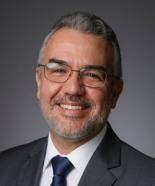
Prof. Dr. Tarso Vilela Ferreira

Federal University of Sergipe, Brazil

Keynote Speech: Mitigating Saline Contamination in High-Voltage Systems: A Multimodal Diagnostic Approach

The degradation of dielectric withstand capability in high-voltage insulation due to salinity accumulation demands advanced monitoring and diagnostic approaches to prevent systemic failures. This lecture will address the development of models based on the continuous monitoring of leakage current in insulators, climatological data, salinity deposition, and multispectral imaging. The discussion will cover the instrumentation and data collection techniques employed to feed these models, including the structuring of image databases across multiple ranges of the electromagnetic spectrum, daytime direct optical inspection to track corona discharge activity, and the evaluation of the thermal behavior of the equipment using thermography. The gains derived from this multimodal approach enable operators to overcome empirical maintenance methods, establishing deterministic parameters for asset operation. By correlating surface electrical and thermal activities with the severity of environmental pollution, the research has resulted in a system capable of indicating the opportune moments for predictive equipment washing several weeks in advance. During the presentation, practical results in mitigating disruptive discharges and untimely shutdowns will be detailed, demonstrating how these methodological innovations preserve insulation integrity and can be extrapolated to transmission lines and other substations exposed to extreme pollution conditions.


Professor Tarso Vilela Ferreira was born in Aracaju, Sergipe, Brazil, in 1980. He received his B.Sc., M.Sc., and D.Sc. degrees in electrical engineering from the Federal University of Campina Grande (UFCG), Campina Grande, Paraíba, Brazil, in 2005, 2007, and 2011, respectively. He served as a Professor at UFCG from 2008 to 2017. Since 2017, he has been a Professor at the Federal University of Sergipe (UFS), São Cristóvão, Sergipe, Brazil. Throughout his career, he has coordinated several research projects and served as the leader of the High Voltage, Metrology, and Simulation laboratories. His research interests include high-voltage equipment, electric field mapping, digital signal processing, insulation systems, and power quality. Dr. Ferreira is also an IEEE Senior Member and a Research Fellow at INESC P&D Brazil.